Suspect Materials That Delay Construction Schedules
Asbestos Inspection and Sampling in Goodrich for contractors and property owners encountering hazardous material concerns before remodeling or repairs begin
Older buildings in Goodrich often contain materials that require meticulous professional evaluation before any renovation, selective demolition, or restoration work can proceed safely and effectively. Recognizing the potential hazards, Atlas Service Group, LLC offers comprehensive inspections of properties to identify suspected asbestos-containing materials. During these evaluations, they meticulously collect samples that help determine whether environmental controls must be implemented prior to initiating other construction activities. Failure to conduct organized inspection and sampling can lead contractors to face significant risks, including regulatory violations, unexpected work stoppages, and project delays—particularly when disturbing materials that have not undergone prior assessment.
The inspection process specifically targets areas where asbestos-containing products were historically installed. This includes mechanical rooms characterized by wrapped pipes, ceilings that feature acoustic tiles, basements filled with vermiculite insulation, and floors that are covered with sheet vinyl or mastic adhesives. The sampling process adheres strictly to Michigan’s inspection protocols, ensuring that representative portions are collected from each distinct material type. These samples are then submitted for rigorous laboratory analysis to confirm fiber content and classification.
For a smooth and safe construction process, it is crucial to arrange an inspection to evaluate any suspect materials and clearly define testing requirements before any construction activities begin. By taking these proactive measures, property owners can avoid potential health risks and ensure compliance with all relevant regulations.
How Inspection Supports Informed Project Decisions
Inspection involves documenting suspect materials by location, condition, and friability—whether the material crumbles under hand pressure—because friable materials present higher regulatory concern. Sampling collects material from each homogeneous area, meaning visually similar products installed during the same construction phase, to ensure laboratory results accurately represent what exists throughout the property.
After inspection and sampling, you receive a detailed report identifying which materials were evaluated, where samples were collected, and what laboratory findings indicate about asbestos content. These findings clarify whether abatement is required, whether work can proceed without disturbance, or whether alternative construction methods reduce exposure risk while preserving project timelines.
Inspection does not include abatement or material removal—it establishes a documented baseline that supports permitting, contractor bidding, insurance claim justification, and compliance planning. Property stakeholders use inspection reports to compare abatement costs against project budgets and determine whether environmental concerns alter construction sequencing..
Common Questions About Property Inspection
Contractors managing tenant improvements, property owners planning remodels, and restoration teams coordinating insurance-related repairs often request inspection before disturbing original building materials.
What triggers the need for asbestos inspection?
Inspection is recommended before any activity that disturbs materials, including ceiling removal, flooring replacement, pipe insulation removal, wall demolition, or roof tear-offs—Michigan regulations require evaluation before disturbing suspect materials in commercial properties and multi-family buildings.
How is sampling performed without spreading contamination?
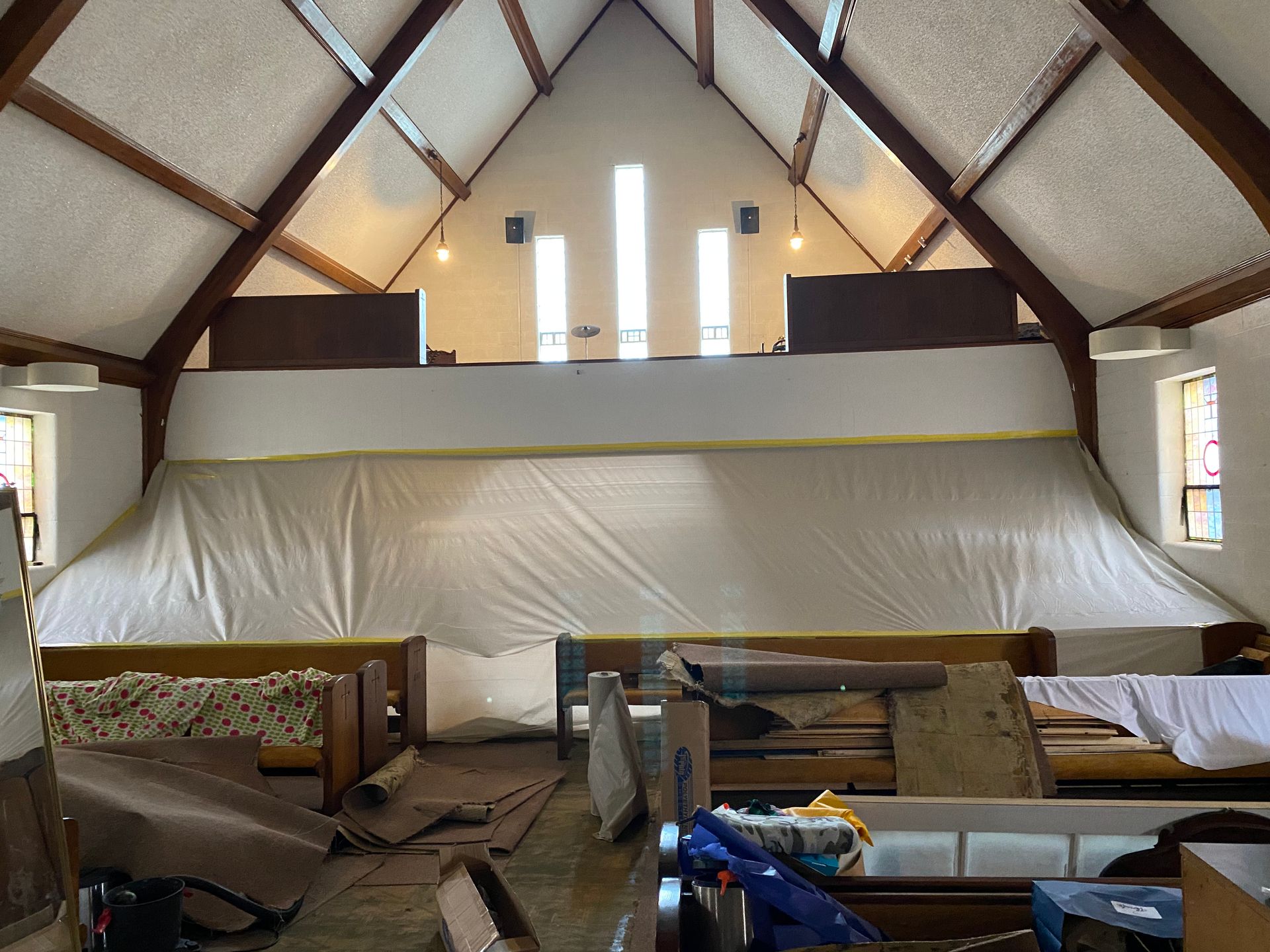
Sampling uses contained hand tools, plastic sheeting to catch debris, and wet methods to minimize airborne fibers during collection—samples are sealed in labeled containers and transported to certified laboratories for polarized light microscopy analysis.
Why does inspection matter for restoration projects?
Water intrusion, fire damage, and storm losses often compromise building materials that were stable before the event, increasing friability and regulatory concern—inspection identifies which damaged materials require abatement before cleanup and reconstruction proceed.
What should contractors expect from an inspection report?
Reports document each inspected material, sample locations, laboratory results showing asbestos type and percentage, and recommendations about regulatory thresholds that apply to planned disturbance activities in Goodrich.
When does inspection need to happen relative to other project phases?
Inspection occurs after initial project scoping but before contractors submit final bids or obtain permits—early inspection prevents mid-project delays and allows abatement to be incorporated into construction schedules and cost estimates.
Atlas Service Group, LLC performs asbestos inspection and sampling for residential properties, commercial buildings, and restoration projects where environmental planning affects construction timelines. Request an evaluation to determine whether suspect materials require laboratory testing before your project moves forward.