Confirmed Hazards Removed Before Renovation Continues
Asbestos Abatement in Goodrich for properties requiring licensed removal before demolition, remodeling, or restoration work proceeds
When laboratory testing confirms asbestos in building materials scheduled for disturbance, abatement becomes necessary before other construction trades can safely proceed. Pipe insulation that tests positive for chrysotile asbestos cannot be removed by general contractors without violating Michigan regulations, and ceiling tiles containing tremolite fibers require containment protocols that exceed standard demolition practices. Atlas Service Group, LLC performs asbestos abatement for residential properties, commercial buildings, and restoration projects where confirmed environmental hazards interrupt schedules and complicate project planning in Goodrich.
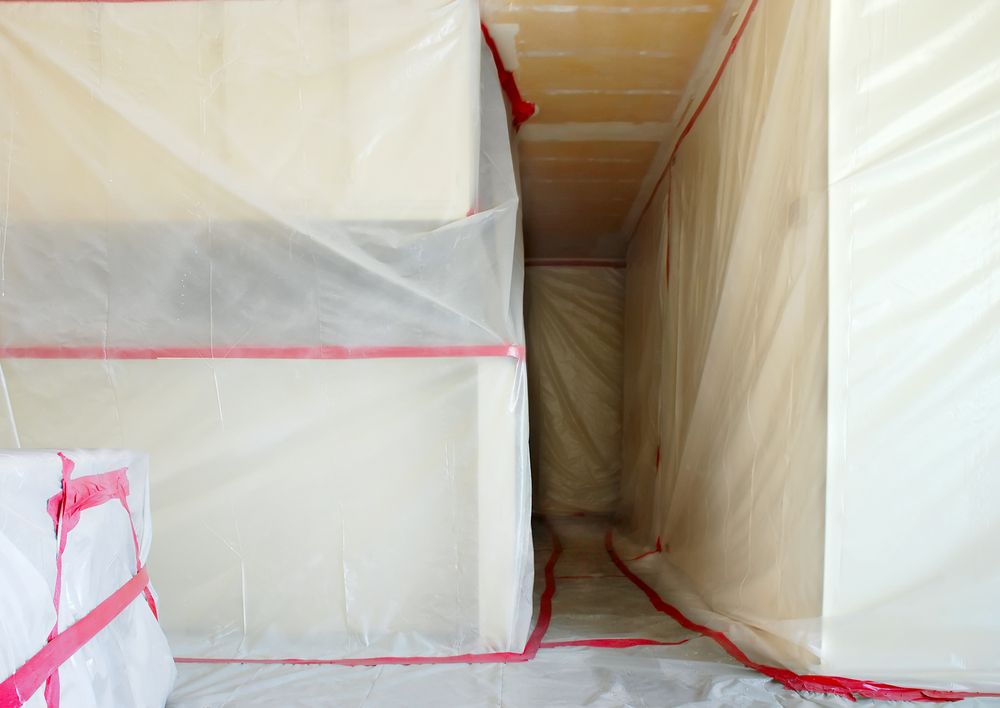
Abatement begins with project-specific planning that defines work areas, establishes containment barriers using polyethylene sheeting and negative air pressure, and coordinates removal sequences with contractors waiting to begin subsequent phases. Licensed abatement workers remove confirmed asbestos-containing materials under wet methods that suppress fiber release, package waste in labeled disposal bags, and decontaminate work zones before clearance air sampling verifies safe re-entry conditions.
Request an assessment to define abatement requirements and coordinate environmental work with your renovation or restoration schedule.
What Proper Abatement Requires
Abatement projects require licensed supervision, certified worker training, and adherence to Michigan Department of Environment, Great Lakes, and Energy notification requirements. Containment zones are sealed with multiple layers of plastic sheeting, and negative air machines equipped with HEPA filtration maintain lower air pressure inside work areas to prevent fiber migration into adjacent spaces. Removal proceeds using hand tools, wetting agents, and careful handling to minimize disturbance of materials already compromised by age or previous damage.
Once abatement concludes, work areas are visually inspected for remaining debris, HEPA-vacuumed to capture settled fibers, and wet-wiped to remove residual dust before air sampling confirms fiber concentrations meet clearance thresholds. You receive documentation that allows contractors to re-enter the space, obtain final permits, and resume construction without regulatory concerns or liability exposure.
Abatement does not include structural repairs, general demolition, or reconstruction—it addresses the environmental hazard so other trades can safely perform their scopes. Some projects require sequential abatement as demolition exposes additional suspect materials, while others complete all environmental work in a single mobilization before construction begins.
Answers to Frequent Abatement Questions
Restoration professionals, insurance-related project teams, and property owners managing complex renovations often coordinate abatement before other contractors mobilize.
What materials commonly require abatement in older Michigan buildings?
Pipe insulation containing chrysotile or amosite fibers, acoustic ceiling tiles with actinolite, sheet vinyl flooring bonded with asbestos-containing mastic, roofing felts beneath original shingles, and textured wall coatings applied before regulatory changes all frequently test positive and require licensed removal when disturbed.
How does containment prevent contamination during abatement?
Containment uses overlapping polyethylene barriers secured with spray adhesive, airlocks for worker entry and exit, and negative air machines that cycle air through HEPA filters to maintain directional airflow from clean areas toward work zones—this prevents asbestos fibers from migrating into occupied spaces.
What happens if abatement discovers additional asbestos materials?
Additional materials require updated notifications, revised abatement plans, and extended containment—early comprehensive inspection minimizes surprises, but concealed materials behind walls or above ceilings occasionally appear once demolition begins.
How long does abatement delay construction schedules?
Abatement duration depends on material quantity, accessibility, and containment complexity—small residential projects may complete in two to four days, while commercial abatement involving multiple floors or mechanical systems can require several weeks in Goodrich.
What documentation do contractors need after abatement finishes?
Contractors receive clearance air sampling results, waste manifests confirming legal disposal, and project completion reports that satisfy permit authorities and insurance adjusters reviewing environmental compliance before approving next-phase funding.
Atlas Service Group, LLC coordinates asbestos abatement for renovation projects, restoration scopes, and commercial tenant improvements where confirmed hazards must be addressed before construction proceeds. Contact our team to review your project and define the abatement scope required before other trades begin work.